



Brand Design Strategy
Biophilic design is more than placing nature into a space. When done thoughtfully, it becomes part of a brand’s language—shaping how people feel, pause, and connect across environments.
At Fleur Reverie, we work with brands to develop guidance-led biophilic frameworks using preserved moss and botanical systems. Our approach focuses on long-term consistency, emotional impact, and scalability—allowing nature to be experienced as a quiet, intentional expression of brand identity.

WHY Brand-led Biophilic Design
From Decoration to Design Strategy
Many botanical installations are created as one-off gestures. While visually striking, they often lack consistency, longevity, or relevance across multiple locations.
Brand-led biophilic design shifts the focus from individual installations to a repeatable design language—one that can be applied across regions, property types, and architectural conditions while maintaining a cohesive experience.
Preserved botanical systems make this possible by removing variables like climate, irrigation, and ongoing maintenance.
1. Design Intent & Emotional Outcomes
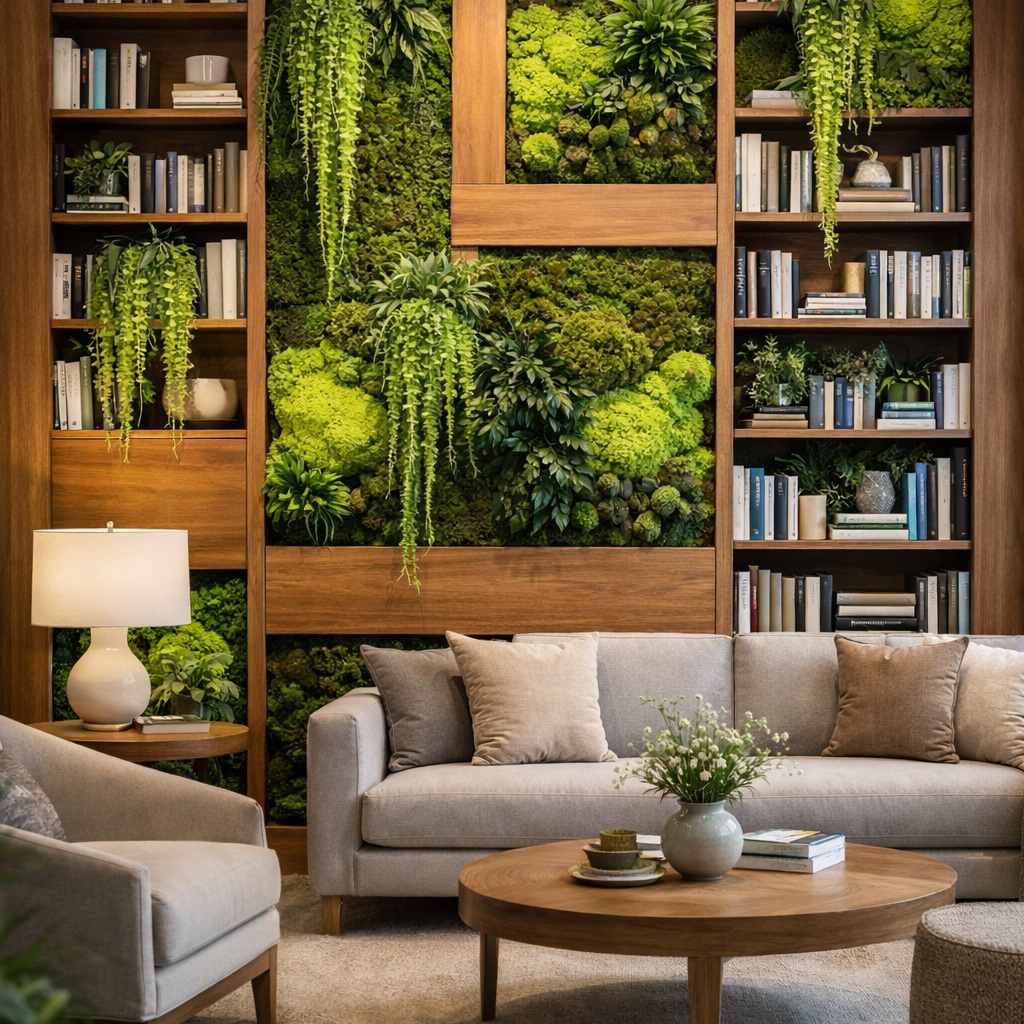
Every framework begins with understanding how a space should feel. Calm, balance, presence, and restoration guide decisions more than form or trend.
We identify:
- Where moments of pause naturally occur
- How guests or occupants move through space
What emotional tone aligns with the brand
2. System-Based Thinking, Not One-Off Designs
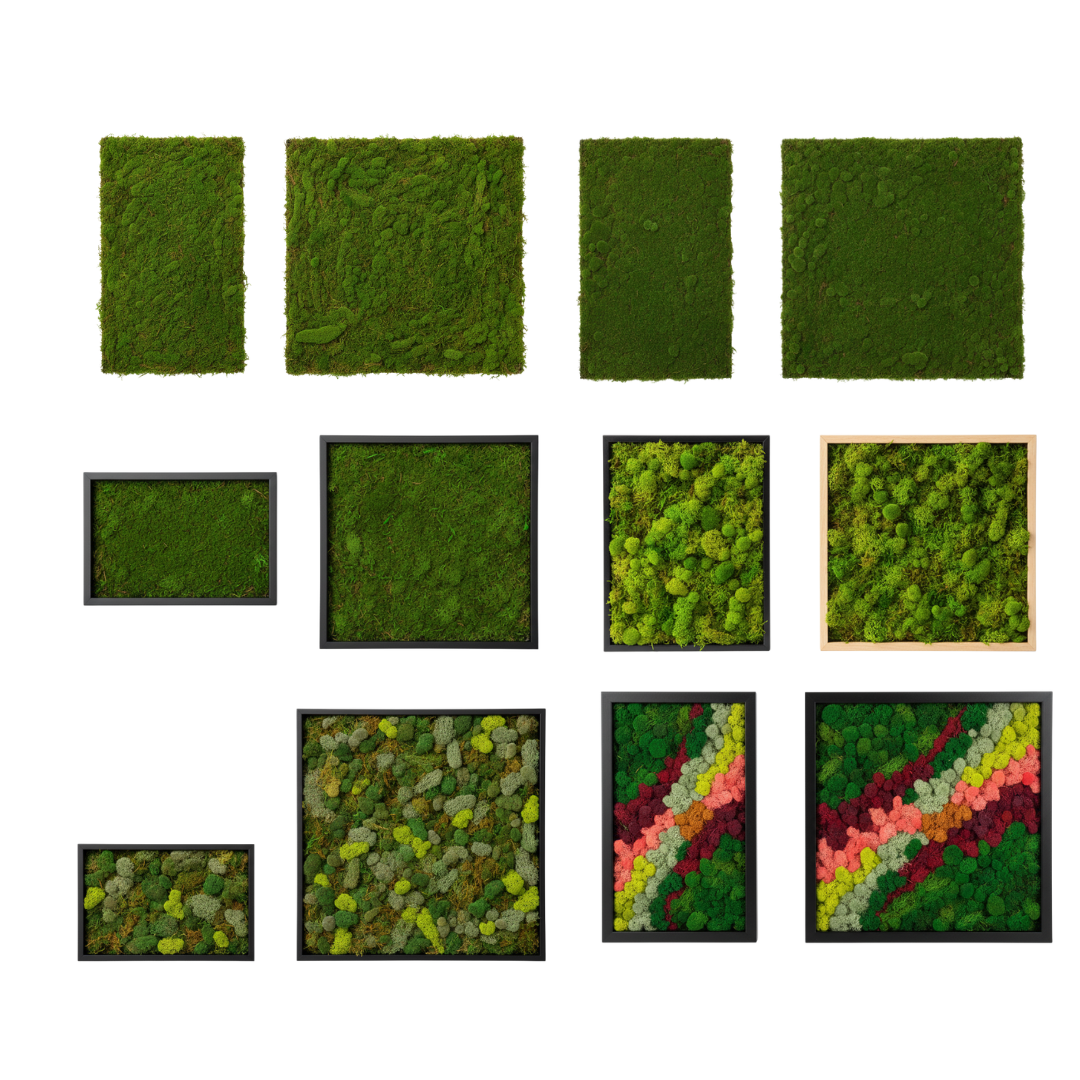
Rather than designing individual installations, we work at the system level—defining design rules that ensure consistency without rigidity.
This includes:
- Core material families
- Approved color and texture ranges
- Proportional and density guidelines
- Assembly logic that can adapt to scale
3. AxioMoss Modular System
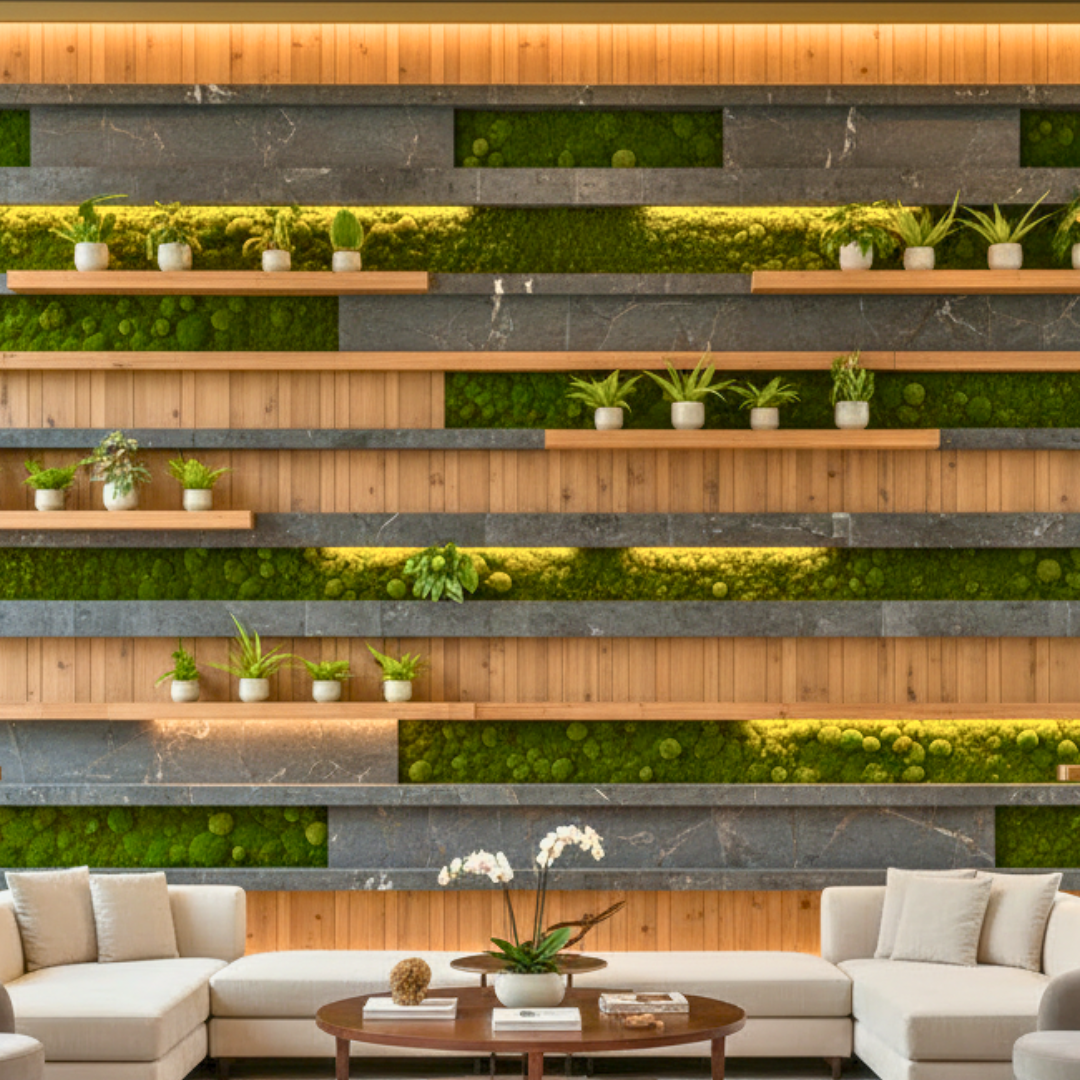
Our AxioMoss Modular System was developed to support this type of global consistency. It allows preserved moss and botanical elements to be organized into repeatable formats that maintain a recognizable visual language across locations.
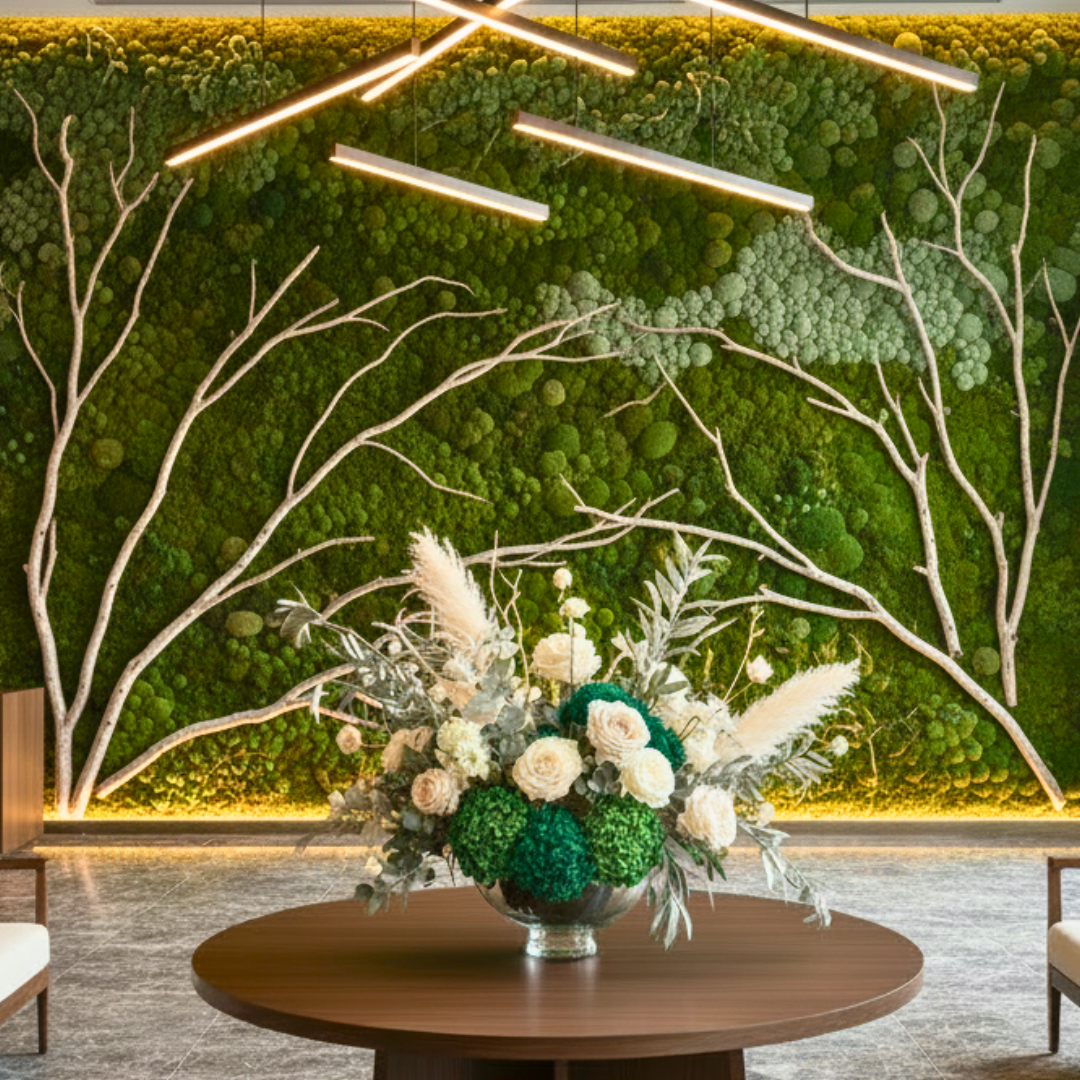
The result is not identical outcomes, but coherent expression—a shared design DNA that can flex with architecture and context.
4. Global Consistency with Local Adaptation
A successful framework balance allows local teams to implement confidently while preserving brand intent:
Elements that remain consistent
- Material types
- Color temperature
- Texture density
- Emotional tone
Elements that can adapt locally
- Scale
- Configuration
- Placement
- Architectural integration
1. Design Intent & Emotional Outcomes
Every framework begins with understanding how a space should feel. Calm, balance, presence, and restoration guide decisions more than form or trend.
We identify:
- Where moments of pause naturally occur
- How guests or occupants move through space
What emotional tone aligns with the brand
2. System-Based Thinking, Not One-Off Designs
Rather than designing individual installations, we work at the system level—defining design rules that ensure consistency without rigidity.
This includes:
- Core material families
- Approved color and texture ranges
- Proportional and density guidelines
- Assembly logic that can adapt to scale
3. AxioMoss Modular System
Our AxioMoss Modular System was developed to support this type of global consistency. It allows preserved moss and botanical elements to be organized into repeatable formats that maintain a recognizable visual language across locations.
The result is not identical outcomes, but coherent expression—a shared design DNA that can flex with architecture and context.
4. Global Consistency with Local Adaptation
A successful framework balance allows local teams to implement confidently while preserving brand intent:
Elements that remain consistent
- Material types
- Color temperature
- Texture density
- Emotional tone
Elements that can adapt locally
- Scale
- Configuration
- Placement
- Architectural integration

FROM FRAMEWORK TO IMPLEMENTATION
Our role is to define the guidance and system logic that enables others to execute successfully.
Typical outputs may include:
- Design principles and intent statements
- Modular system definitions
- Material and color standards
- Visual examples of acceptable variation
- High-level implementation guidance
Execution can then be carried out by local teams or partners using the established framework.

WHY PRESERVED BOTANICAL SYSTEMS
Preserved moss and botanicals are particularly well suited to brand-led environments because they:
- Require no watering, sunlight, or ongoing care
- Reduce operational and environmental burden
- Maintain visual consistency over time
- Support sustainability goals through longevity
This allows brands to focus on experience rather than upkeep.

WHO THIS IS FOR
- Hospitality and lifestyle brands
- Workplace and mixed-use portfolios
- Global or multi-regional properties
- Brand, design, and experience teams
- Organizations exploring long-term biophilic strategies
Book a Free Design Consultation
Biophilic design is most powerful when it becomes part of a brand’s identity—not an afterthought. A guidance-led approach allows nature to be expressed with intention, consistency, and care—creating environments that feel restorative wherever they exist.
We respect your privacy
Your information is secure and used only for responding to inquiries.


